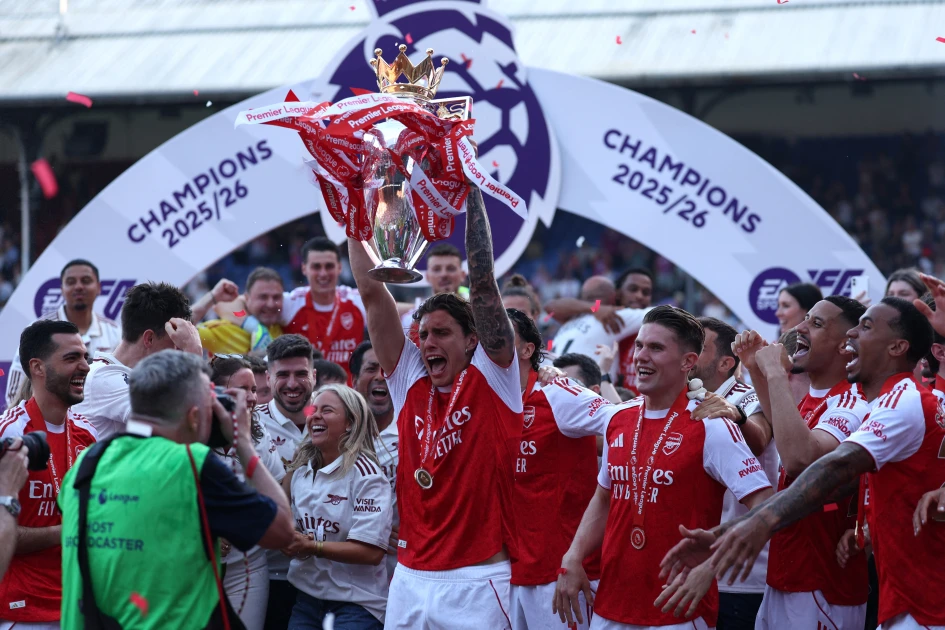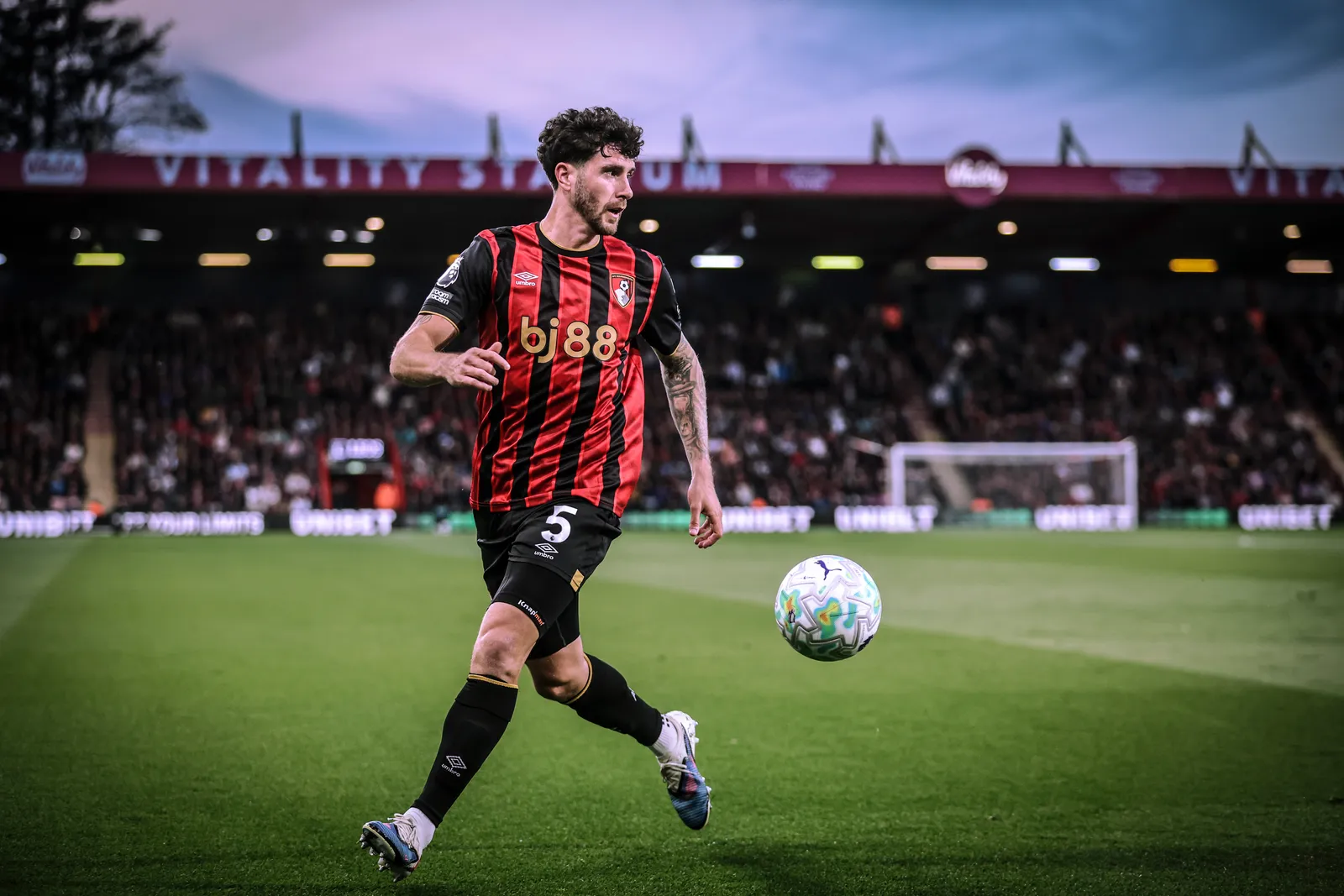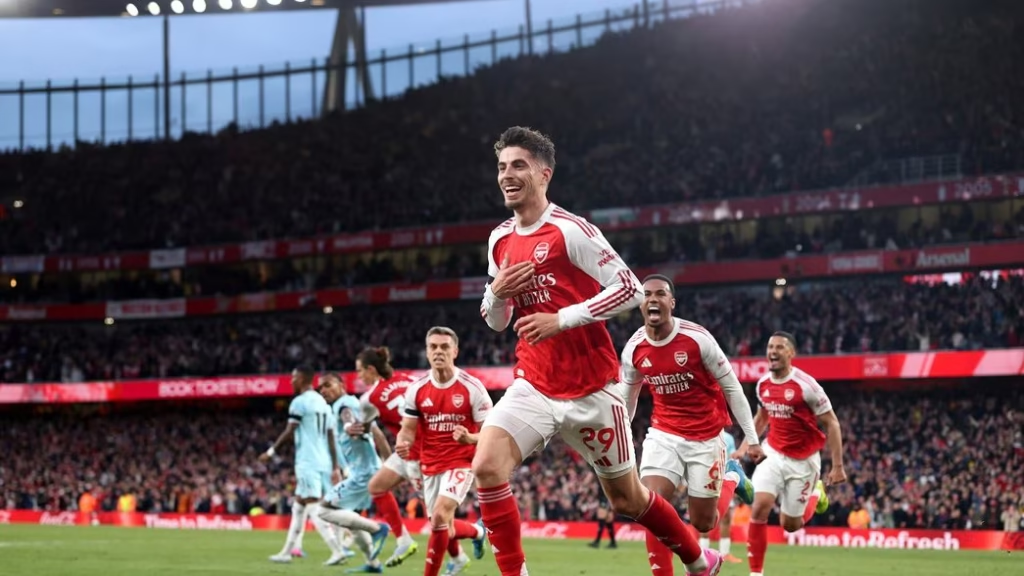
Arsenal have finally ended their two-decade wait to clinch the Premier League title after Bournemouth held Manchester City to a 1-1 draw at the Vitality Stadium on Tuesday night.
We walk you through where they have come from since their last title win, what held them back from winning the EPL again, and how they performed each season until they finally lifted the trophy this year.
Performance History
Arsenal last won the Premier League in the legendary 2003–04 campaign, when Arsène Wenger’s side drew 2-2 with Tottenham in a fierce North London derby at White Hart Lane on April 25, 2004.
The Gunners raced into an early lead when captain Patrick Vieira scored in the third minute. French midfielder Robert Pires doubled the advantage in the 35th minute. Tottenham fought back in the second half with a long-range strike from Jamie Redknapp and a late penalty from Robbie Keane. Despite the draw, the result was enough to trigger wild celebrations on rival territory, as Arsenal earned the single point they needed to mathematically secure the title with games to spare.
Most uniquely, Arsenal did not just lift the standard trophy in 2004. Having completed the entire 38-game season unbeaten as “The Invincibles,” the Premier League commissioned a special, one-of-a-kind gold replica trophy. This golden version was exclusively awarded to Wenger’s squad to commemorate their historic achievement.
Challenges
Several structural and financial challenges emerged after 2004, leading to a 22-year title drought. The main catalyst was the massive financial burden of building and moving into the Emirates Stadium in 2006. To fund the new arena, the club had to rein in spending on transfers. As a result, Arsenal struggled to keep hold of their world-class talent and often sold key stars to wealthier rivals.
At the same time, the financial takeovers at Chelsea and later Manchester City dramatically raised the bar in terms of points needed to win the league. As Arsenal transitioned to a younger squad, they gained a reputation for tactical fragility in crucial winter periods. Following Arsène Wenger’s eventual departure, a complex period of managerial and boardroom changes further delayed their return to the summit.
Over the subsequent 21 seasons without a title, Arsenal’s league positions fluctuated. They finished as runners-up in 2004–05 before slipping to fourth in 2005–06. The club then posted consistent fourth-place finishes in 2006–07 and again later. A strong title challenge fell just short in 2007–08, resulting in third place, before they returned to fourth in 2008–09. They climbed back to third in 2009–10, fell to fourth in 2010–11, and recovered to third in 2011–12.
Another fourth-place finish followed in 2012–13, mirrored in 2013–14, before they improved to third in 2014–15. Arsenal achieved their highest placing of that decade with second place in 2015–16 but then dropped out of the top four, finishing fifth in 2016–17 and missing out on Champions League qualification for the first time since the 1996–97 season.
Wenger had previously led the club to an English record of 19 consecutive seasons in the Champions League, spanning from 1998–99 through 2016–17.
Arsène Wenger’s Final Season Disappointment
Wenger’s final campaign ended in a disappointing sixth-place finish in 2017–18. He stepped down with honour in May that year, having served as manager for 22 years since October 1996 and becoming the longest-serving manager in Premier League history.
Change Of Guard
Unai Emery arrived from Paris Saint-Germain, where Arsenal had closely followed his strong record in France. Emery enjoyed a highly productive spell with PSG, winning seven domestic trophies out of a possible eight, though he famously missed out on the Ligue 1 title to Monaco in 2017 and suffered a memorable Champions League collapse against Barcelona.
Arsenal were drawn to his proven European pedigree, particularly his record of three consecutive UEFA Europa League titles with Sevilla, seeing him as the ideal figure to guide the club back among Europe’s elite.
In his first season, Emery’s team finished fifth in 2018–19, missing out on Champions League qualification for a third straight year. A difficult transition followed, with the side slumping to an all-time Premier League low of eighth in 2019–20.
Mikel Arteta’s Era Begins
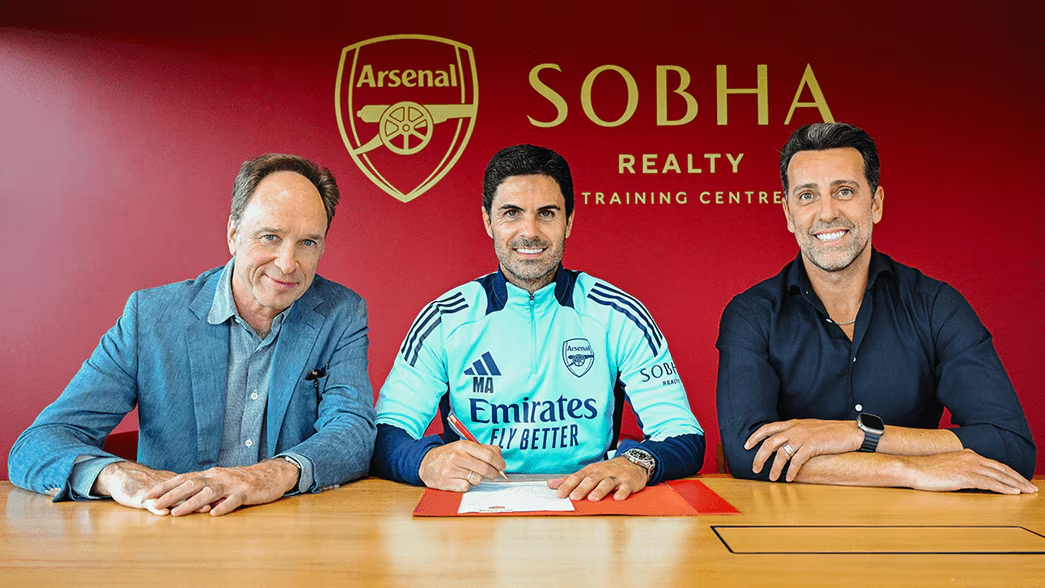
The former Arsenal midfielder was appointed in December 2019, joining from Manchester City where he had served as Pep Guardiola’s assistant. Arteta was viewed as the right man to take the club forward, thanks to his deep understanding of Arsenal’s culture as a former captain and his valuable tactical experience under the highly successful Guardiola.
Arteta’s first full season brought no major leap forward, with another eighth-place finish in 2020–21. But signs of progress emerged as they climbed to fifth in 2021–22.
The Near-misses
Heartbreaking title races followed, with Arsenal finishing second for three consecutive seasons in 2022–23, 2023–24, and 2024–25, right before Tuesday’s glory on May 19, 2026. Arteta now becomes the first former Premier League player to win the title as a manager.
It has been quite the rollercoaster for the Gunners. Their fans have had mixed feelings about Arteta’s ability to end the long title drought, but what is clear now is that the former captain has shown he is more than capable of leading Arsenal to even greater heights.
Arsenal will now turn their attention to the possibility of a domestic and European double when they face PSG in the Champions League final on Saturday, May 30, 2026.